
Design patents protect appearance, and the drawing is the claim
A design patent covers how an article looks, so the views you file define what you get.
Lesson 7 of 9 · 4 min
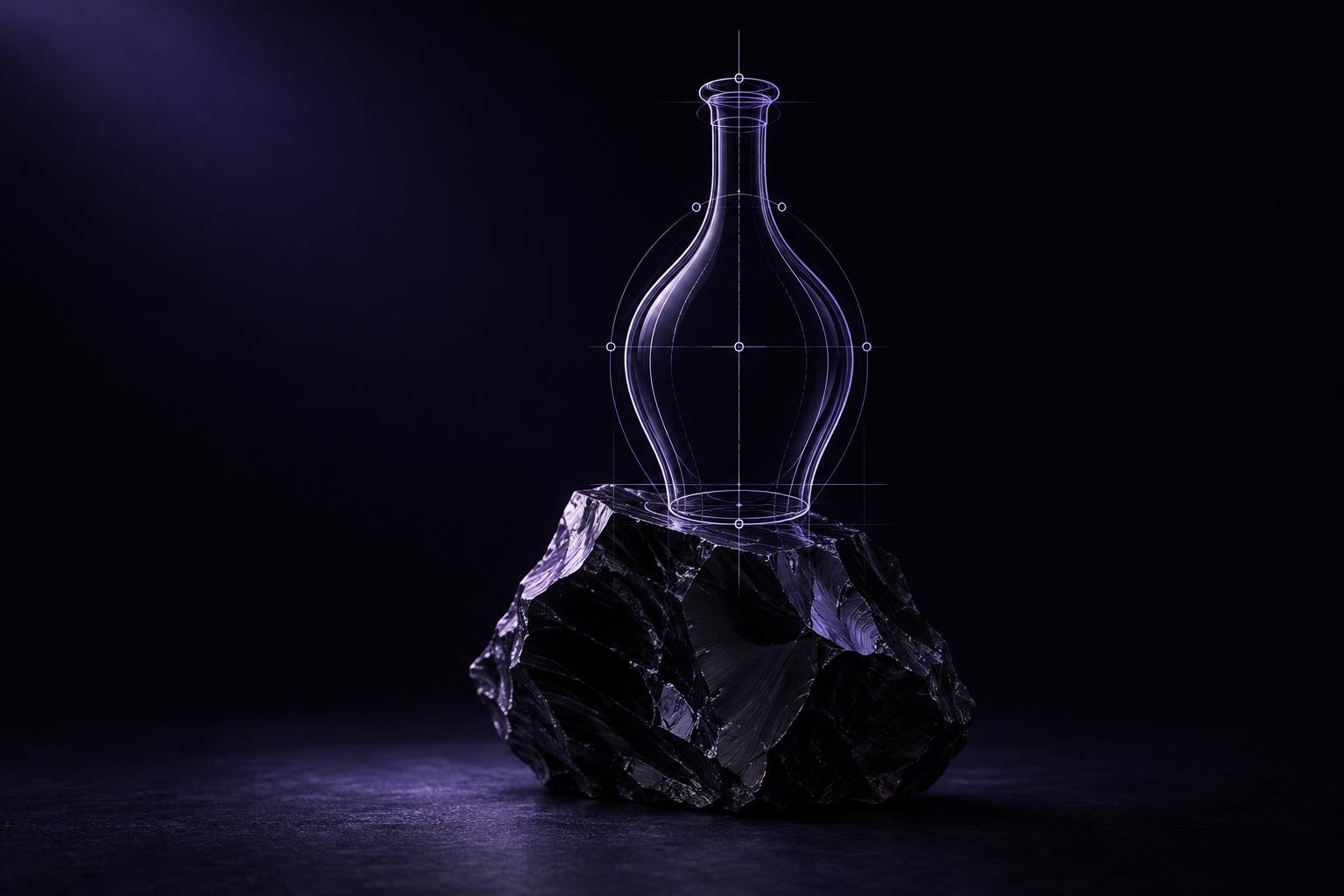
A different kind of patent
A utility patent protects how something works. A design patent protects how an article looks, because its claim covers the design for an article (MPEP § 1502). The two follow different rules, and assumptions carried over from one can cost you the other.
One claim, and the drawing does the work
A design application has one claim in formal terms, and the title must designate the article (37 C.F.R. § 1.153). The article is the thing the design is applied to, such as a bottle or a chair. The claim covers the design for an article, not the article itself (MPEP § 1502).
There is no long list of claim elements to argue over. In a design application, the drawing is the claim in practice: the views must fully disclose the appearance (37 C.F.R. § 1.152). If a surface is not shown, you have not shown what it looks like.
Solid lines and broken lines
Broken lines may show environment, meaning surroundings that are not part of the claimed design. Solid black shading is restricted (37 C.F.R. § 1.152). Broken lines cannot mark "unimportant" features of the claimed design (MPEP § 1503). A feature is either part of the design or it is not.
In our judgment, the choice of what to draw in solid lines is the main drafting decision in a design application. It deserves the attention that claim wording gets in a utility application.
Timing and term
Design patents run on their own clock:
- The term is 15 years from grant (35 U.S.C. § 173).
- The priority period for foreign filings is six months, and no provisional benefit is available (35 U.S.C. § 172).
- No maintenance fees apply (35 U.S.C. § 41).
The second point catches inventors out. A provisional application cannot hold a place for a design, so a plan built on one will fail for that purpose (35 U.S.C. § 172).
Screens and interfaces
A graphical user interface, or GUI, is the on-screen look of software. The rules for GUI and icon drawings changed recently (91 FR 12394), so check the dated section below before you prepare those drawings.
Timeless wisdom
A design patent protects the design for an article, not the article itself (MPEP § 1502). There is one claim in formal terms (37 C.F.R. § 1.153), so the views carry the scope and must fully disclose the appearance (37 C.F.R. § 1.152). The term is 15 years from grant (35 U.S.C. § 173), priority is six months, and no provisional benefit is available (35 U.S.C. § 172).
What's current
As of November 6, 2026
Since March 13, 2026, GUI and icon drawings need not show a display panel where the title and claim identify a computer, computer system or display panel. Projections and holograms may qualify if more than transient or disembodied images. The guidance applies to applications filed before, on or after that date (91 FR 12394), and it controls over any conflicting text in MPEP § 1504.01(a).
As of November 6, 2026, undiscounted design fees are $300 filing, $300 search and $700 examination (fee schedule). LKQ (May 21, 2024) now governs design obviousness (opinion). Expedited design examination was removed in 2025 (90 FR 39124). A USPTO bulletin reports first-action pendency falling from 16.9 to 14 months, a figure we treat as FY2026 pending confirmation (bulletin).
Key takeaways
- A design patent protects appearance, and the views define it.
- Broken lines may show environment, not unimportant parts of the design.
- A design cannot claim benefit of a provisional application.
- Design patents last 15 years from grant, with no maintenance fees.
Check your understanding
Sources
- 37 C.F.R. § 1.153
- MPEP § 1502
- 37 C.F.R. § 1.152
- MPEP § 1503
- 35 U.S.C. § 173
- 35 U.S.C. § 172
- 35 U.S.C. § 41
- 91 FR 12394, supplemental guidance on computer-generated designs (Mar. 13, 2026)
- MPEP § 1504.01(a)
- USPTO fee schedule
- LKQ v. GM (Fed. Cir. May 21, 2024)
- 90 FR 39124, eliminating expedited design examination (Aug. 14, 2025)
- USPTO bulletin on design pendency
The Academy is general education, not legal advice, and reading it doesn't create an attorney-client relationship. Patent law and fees change, so check the linked sources and have a registered patent attorney or agent review your situation before you file. Obsidyan sells patent software, including AI drafting tools, so weigh what these lessons say about AI tools with that in mind.