
Eligibility now runs on two tracks
What passes an examiner may still fail in court, so claim and describe a concrete technical improvement either way.
Lesson 4 of 8 · 3 min
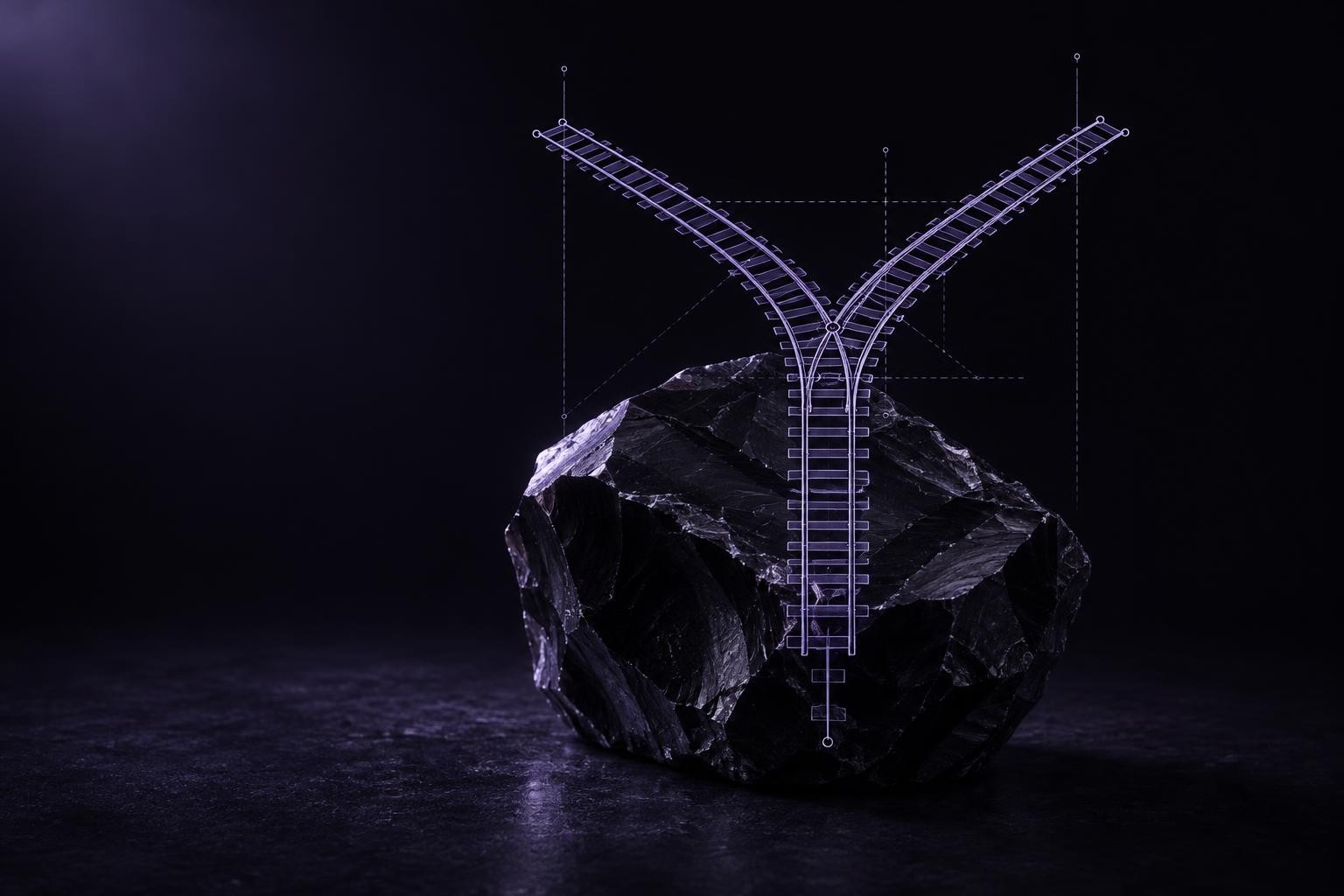
What cannot be patented
Section 101 lists broad categories, but the courts have carved out three exclusions: laws of nature, natural phenomena and abstract ideas (Alice). The question of whether a claim stays clear of them is called subject matter eligibility, or just eligibility.
How the courts ask the question
Alice sets a two-step test. First, is the claim directed to one of the excluded concepts? If so, what else in the claim supplies an "inventive concept"? The opinion says "wholly generic computer implementation" does not.
A few examples show where lines fall. Isolated natural DNA is ineligible, while cDNA, a synthetic copy, is eligible (Myriad). The machine-or-transformation test, which asks whether a process is tied to a machine or changes something, is a useful clue but not the sole test (Bilski).
How the USPTO asks the question
The USPTO, the US Patent and Trademark Office, breaks the analysis into stages: Step 1, Step 2A Prongs One and Two, and Step 2B (USPTO memo). Examiners use those steps, and the Office issues its own guidance on applying them.
That guidance does not bind courts (2024 USPTO AI update). This is why the lesson speaks of two tracks. An examiner may allow a claim, and a judge may later strike it down. A granted patent has cleared the first reader, not the second.
What to do about it
In our judgment, you should write for the stricter reader, whichever one that is at the time. Three habits help:
- Describe the concrete technical problem and how your invention improves on earlier approaches.
- Claim how the result is achieved, not only the result itself.
- Avoid claims that amount to a known idea plus a generic computer.
Think of an application that says only that software predicts customer demand. That states a goal. An application that explains a specific change to how a system processes data, and what that change does better, gives both readers something concrete to assess.
The dated section below shows how far the two tracks have separated. In our judgment, this is one of the fastest-moving areas in this course, so check it often.
Timeless wisdom
Laws of nature and abstract ideas stay outside the patent system. A patent "must do more than simply state the law of nature while adding the words 'apply it'" (Mayo). The same logic reaches computers: a generic machine does not turn an abstract idea into an invention (Alice). Whatever the current mood at the USPTO or in the courts, in our judgment the safest position has stayed the same. Show what you actually changed in the world or in the machine, and put that in the claim.
What's current
As of November 6, 2026
USPTO track: favorable. An August 2025 memo told examiners to reject in a close call only if ineligibility is "more likely than not." Ex parte Desjardins (September 26, 2025; precedential November 4, 2025) vacated a rejection of a machine learning training claim.
Court track: strict. Recentive v. Fox (April 18, 2025) held ineligible patents that "do no more than claim the application of generic machine learning to new data environments." In '637 v. Google, the claims were result-oriented and no improvement was described, and the Supreme Court declined review on October 5, 2026. In our judgment, the recurring 2026 failure is the result-oriented claim.
Congress. As of August 12, 2026, PERA (S. 1546 / H.R. 3152) was in committee in both chambers. We could not verify its status after that date.
Key takeaways
- Laws of nature, natural phenomena and abstract ideas cannot be patented.
- Running an abstract idea on a generic computer does not make it eligible.
- USPTO guidance does not bind courts, so an allowed claim can still fail in court.
- Describe and claim a concrete technical improvement, not just a result.
Check your understanding
Describe your invention's technical improvement
Sources
- Alice v. CLS Bank
- Association for Molecular Pathology v. Myriad
- Bilski v. Kappos
- USPTO memo, August 4, 2025
- 2024 USPTO AI eligibility update (Federal Register)
- Mayo v. Prometheus
- Ex parte Desjardins
- PTAB precedential and informative decisions
- Recentive v. Fox (Fed. Cir.)
- '637 v. Google (Fed. Cir.)
- Supreme Court docket 26-236
- IPO Legislative Tracker, August 12, 2026
The Academy is general education, not legal advice, and reading it doesn't create an attorney-client relationship. Patent law and fees change, so check the linked sources and have a registered patent attorney or agent review your situation before you file. Obsidyan sells patent software, including AI drafting tools, so weigh what these lessons say about AI tools with that in mind.